Week 7 | Neuroscience+Art |
The topics covered in this week is more than interesting to me! I develop a huge passion for psychology during my first psychology class in high school. To me, neuroscience and psychology are both new fields of study, and I found so much impressive information in the lecture.

In the first lecture, professor Vesna introduces the artist Suzanne Anker, who conducted the fMRI Butterfly, which is a combination of art and biological science. The fMRI butterfly is a series of images made from fifteen identical brain scan images. In the center of each image is a blue and yellow butterfly.
In the first lecture, professor Vesna introduces the artist Suzanne Anker, who conducted the fMRI Butterfly, which is a combination of art and biological science. The fMRI butterfly is a series of images made from fifteen identical brain scan images. In the center of each image is a blue and yellow butterfly.
 |
| example 1 |
 |
| example 2 |
We can see from the two examples that the butterflies in the canter of the brain scan are identical, but they look different. We have the illusion because there are variations in the ink blot in the back. The overlapping effects make these brain scans into a great art piece.
 |
| Brainbow |
Another example of the combination of art and neuroscience is Brainbow, which scientists use fluorescent protein and label each neuron with specific colors. This technique developed and helped to map more than hundreds of different neurons and now scientists can study the path of these neurons. The resulted image was so colorful, and I think that is the reason for the title of this method.
 |
| Freud |
Then the professor introduced the famous neurologist and the founder of psychoanalysis: Sigmund Freud.
He was the first person to suggest and study the unconscious mind, which he suggested that consists of id and superego. Many of these studies help to understand human behavior from a different angle and make the understanding human beings more completed.
 |
| Jung |
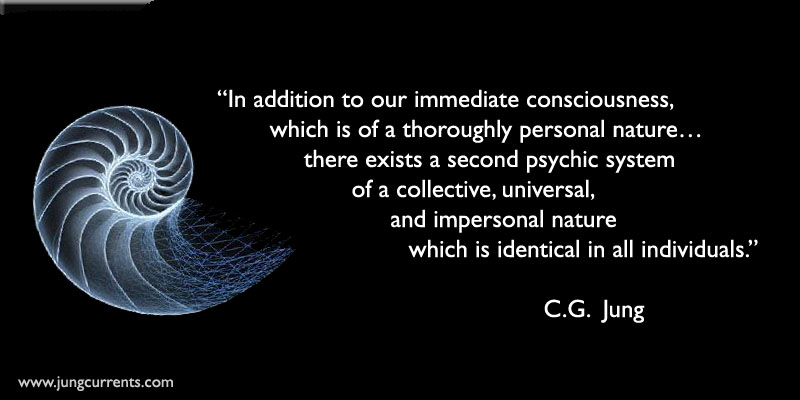
Regards on the history of the research on consciousness. While Freud stated that that unconsciousness is material that has been forgotten or suppressed in everyone's mind, Jung also developed its theory base on that. Jung focuses on religion, dreams and symbols. It divided the unconsciousness into two types: personal unconsciousness and collective unconsciousness. However, I think Jung's idea does not apply to all the people. I think there are no inherited psychic structures because our personalities are shaped by the physical environment and by the social environment and culture background. Just like the debate between nature and nurture, I think nurture is more important to human beings.
Works Cited
Hathaway, Bill. “Marriage of Data Science and Neuroscience at Yale Gets Support from NSF.” YaleNews, 11 Sept. 2018, news.yale.edu/2018/09/11/marriage-data-science-and-neuroscience-yale-gets-support-nsf.Vesna, Victoria. Lecture. “Conscious / Memory (Part 2).” 16 Nov 2012. <http://www.youtube.com/watch?feature=player_embedded&v=Xlg5wXHWZNI>
Vesna, Victoria. Lecture. “Conscious / Memory (Part 3).” 16 Nov 2012. <http://www.youtube.com/watch?feature=player_embedded&v=E5EX75xoBJ0>
Vesna, Victoria. “Conscious / Memory (Part 1).” Lecture. 16 Nov 2012. <http://www.youtube.com/watch?feature=player_embedded&v=DLVQIwOn7o8>
Cleantis, Tracey. “Freudian-Express: Dreams, The Royal Road to the Unconscious.” Psychology Today, Sussex Publishers, www.psychologytoday.com/us/blog/freudian-sip/201101/freudian-express-dreams-the-royal-road-the-unconscious.
“Brainbow Art.” SciArt Prints, sciart-prints.com/products/brainbow-art.
Vesna, Victoria. “Conscious / Memory (Part 1).” Lecture. 16 Nov 2012. <http://www.youtube.com/watch?feature=player_embedded&v=DLVQIwOn7o8>
Cleantis, Tracey. “Freudian-Express: Dreams, The Royal Road to the Unconscious.” Psychology Today, Sussex Publishers, www.psychologytoday.com/us/blog/freudian-sip/201101/freudian-express-dreams-the-royal-road-the-unconscious.
Anker, Suzanne. Neuroculture. www.suzanneanker.com/wp-content/uploads/2009-Anker-Suzanne-Giovanni-Frazzetto-Neuroculture-Nature-Reviews.pdf.


Comments
Post a Comment